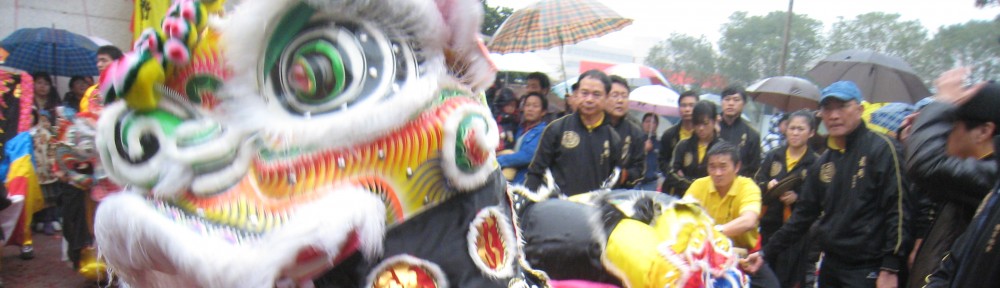
What Penn & Teller taught me about watching lion dancing.
Recently, I’ve been watching a lot of Penn and Teller Fool Us. It’s just been a pleasure to watch great magic performances. And it got me thinking about the parallels between good magic acts and good lion dancing performances.
What particularly got me interested me was that the trick itself often seemed like only one part of the performance.
A magician could perform an incredible trick or sleight of hand, but there was usually a bit of a build up before hand. There was music. There was storytelling. There was comedy. There was timing. The trick might only take a few seconds whilst the performance leading up to the trick much longer, but what the magician does is engage the audience right the way through .
I think lion dancing can be a little bit like that.
We can become very focused on the tricks or difficult stunts. The jump. The thigh stack. The shoulder stack. The head sit. The acrobatics. The move that makes other lion dancers say, “How did they do that?” And those things are useful. They can be impressive and they can give a performance a highlight.
But I don’t think they automatically make the whole performance interesting.
I’ve watched lions perform technically difficult things and found myself losing interest. I’ve also watched lions do relatively simple movements and found myself wanting to keep watching.
When I used to put together a performance, my first instinct was often to think about what movements we can include. What tricks do we know? What haven’t we done before? What would look impressive?
Now I’m thinking whether I should treat lion dancing as theatre. What is the storyline? Where are the moments where the audience should be paying attention? Where can we slow things down? How else can we build the energy?
I’m not suggesting every lion performance needs a complicated storyline, characters and a dramatic ending. But I am starting to get a sense that there is more to putting on a good performance than collecting enough impressive things and arranging them into a sequence.
A good move can be part of a good performance.
A good trick can be part of a good magic show.
But the trick isn’t the show.
And I’m starting to think the same thing applies to lion dancing.
 wakeuplion