I appreciate the skill. I just prefer something else.
I’ve never been a huge fan of modern jong performances, or lion dance competitions for that matter. That probably sounds strange coming from someone who spends so much time watching lion dancing.
Technically and athletically, I think the dancers are incredible. The balance, timing and strength required to jump between poles for while carrying another person for ten minutes is seriously impressive. The ideas teams come up with for competition performances can also be very creative. But competitions come with rules, boundaries and scoring systems. And I sometimes find that, despite all the different teams involved, the performances can start to feel quite similar.
I can understand why so many lion dance teams head in that direction. Competitions give dancers a very clear pathway or a purpose to their training. They can gain rankings and outside of Lunar New Year and Moon Festival Performances, the teams can work towards competing at national and international competitions. In that sense, it works a little like sport. There is always another level to aim for.
It’s just not what I particularly enjoy watching.
I’ll watch a jong performance and think, that’s impressive. But after a while, I often find myself feeling like I’ve seen enough. There are only so many ways a lion can jump between poles.
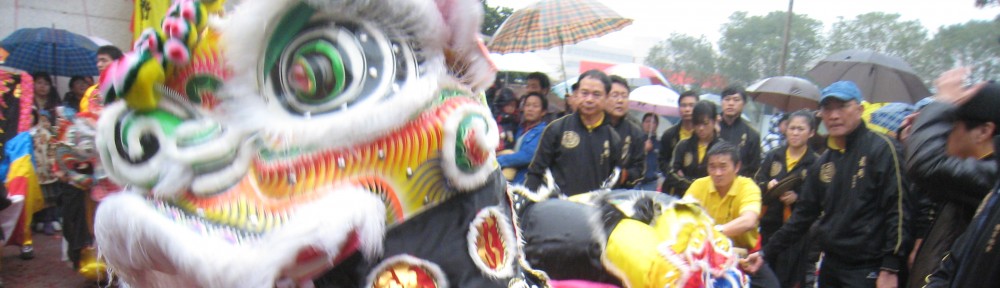
I much prefer street performances. There’s something I like about watching dancers freestyle without worrying about gaining or losing points. It feels grittier and a little more raw. The dancers can throw in something unexpected. The drummer can change the rhythm or play a bit of flower drumming. The lion can react to what is happening around it, interact with the crowd and improvise.
There is also more room, I think, for different schools and traditions to look different. Vietnamese-style lion dancers can dance in their own way. Jow Gar teams can dance in theirs. Hong Kong-style teams can keep doing what they do. Not every style necessarily fits neatly into a competition format, and I think watching those differences is part of what makes lion dancing interesting.
It reminds me a little of street basketball compared with the NBA, or freestyle breakdancing compared with a highly polished gymnastics routine. The competitive version might be more technically impressive but the less polished version can sometimes feel more alive to me. That’s probably just personal preference.
I do think competition has done something valuable for lion dancing. It has pushed the acrobatic and technical side of the art much further than it might otherwise have gone.
But it also makes me wonder about the other direction.
If we’re not trying to make the highest or hardest jump, what are we trying to get better at? What does progression look like for a lion dancer in a “non competitive” team? Can someone become a better performer without becoming a better acrobat? Can we create another pathway for students to work towards?
Those are questions I’m starting to think about as I teach.
Note: I actually love watching the old jong competitions from the late 1980s and early 1990s. The setups were all unique. There were tables on pots, pots on tables, chairs on benches and all sorts of strange variations. The performances were choreographed, but it often felt as though there was still room for the dancers to freestyle between the planned sections. I found that combination much more exciting.

