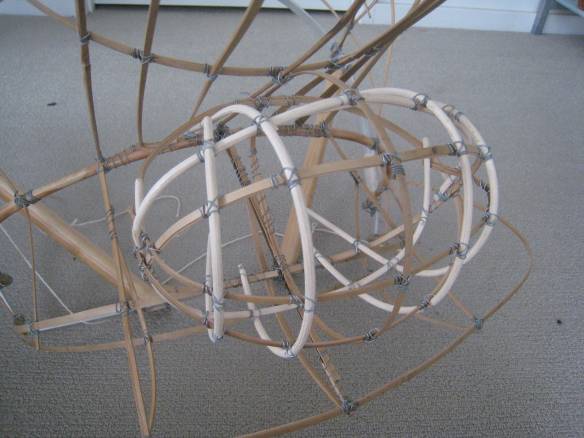
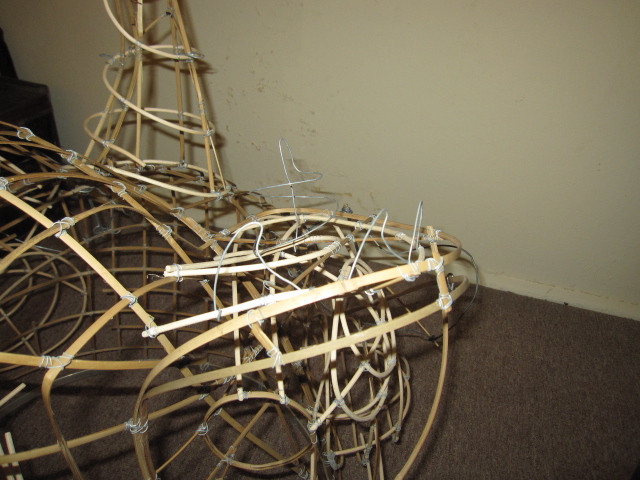
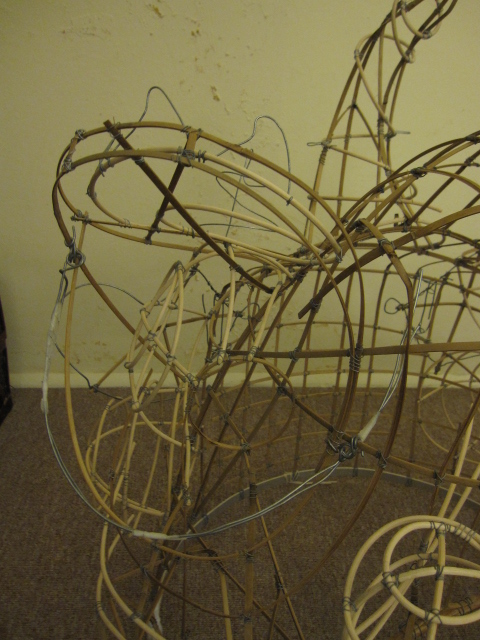
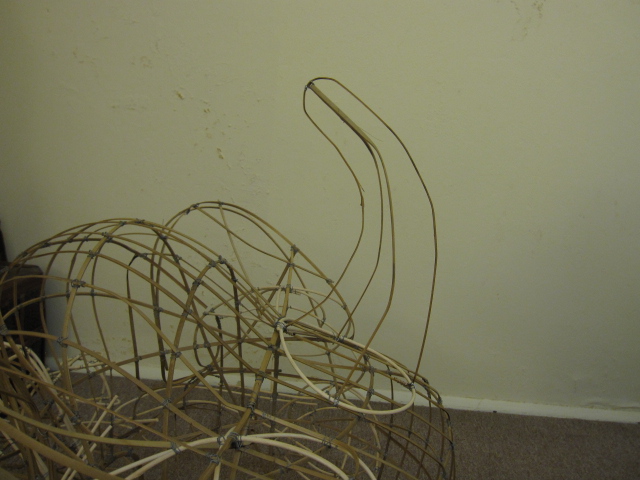
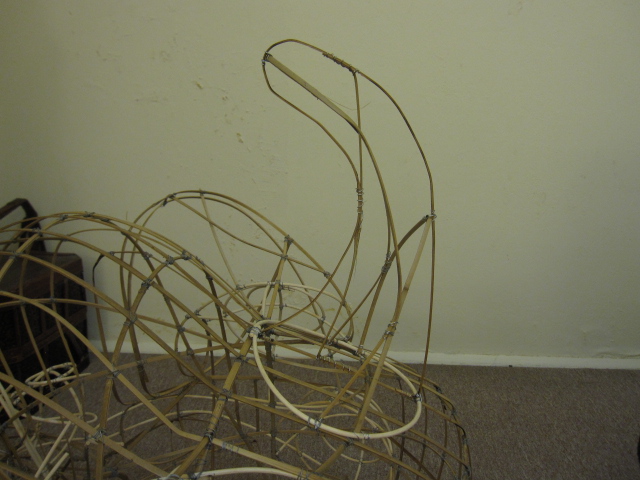
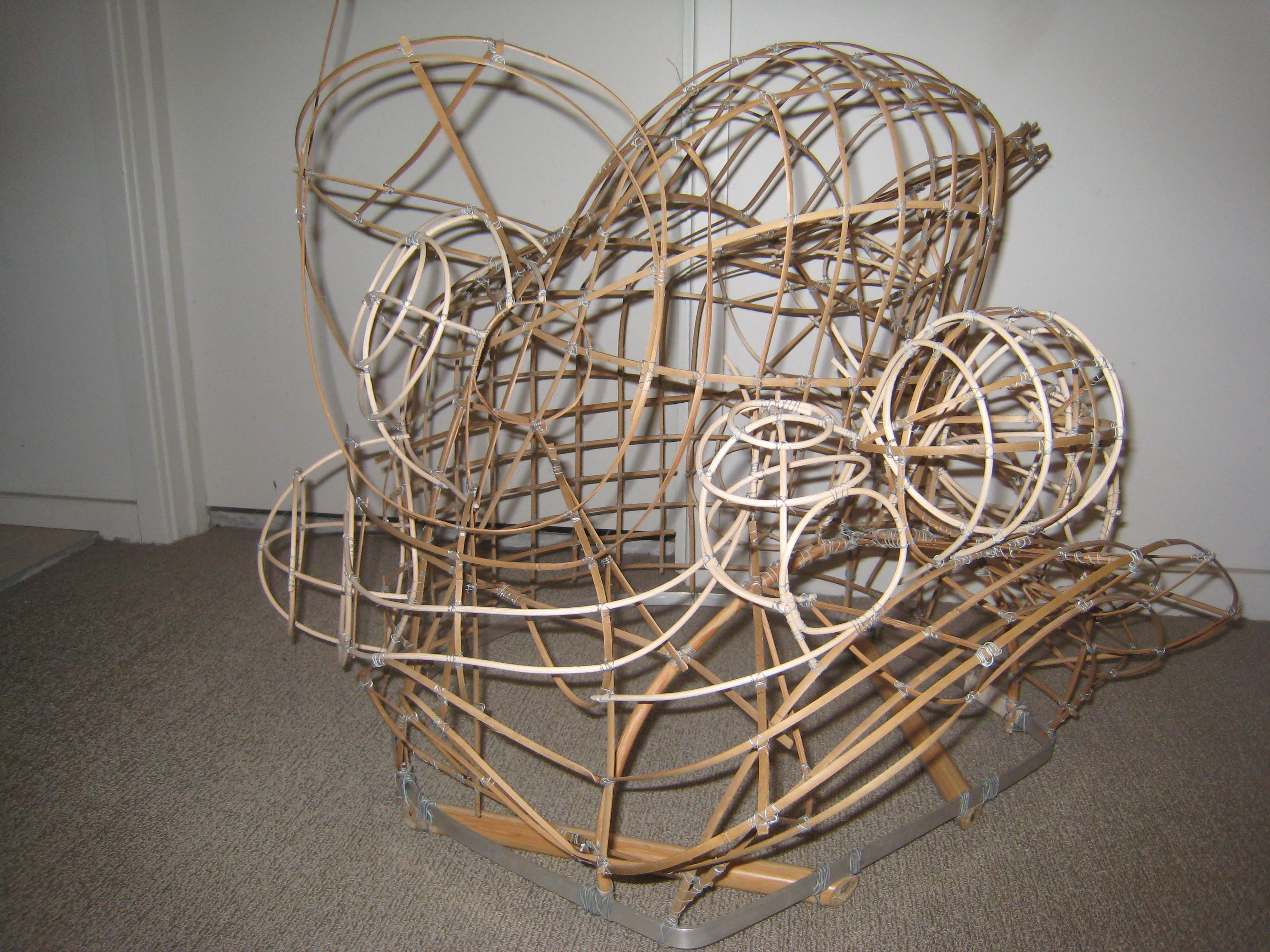
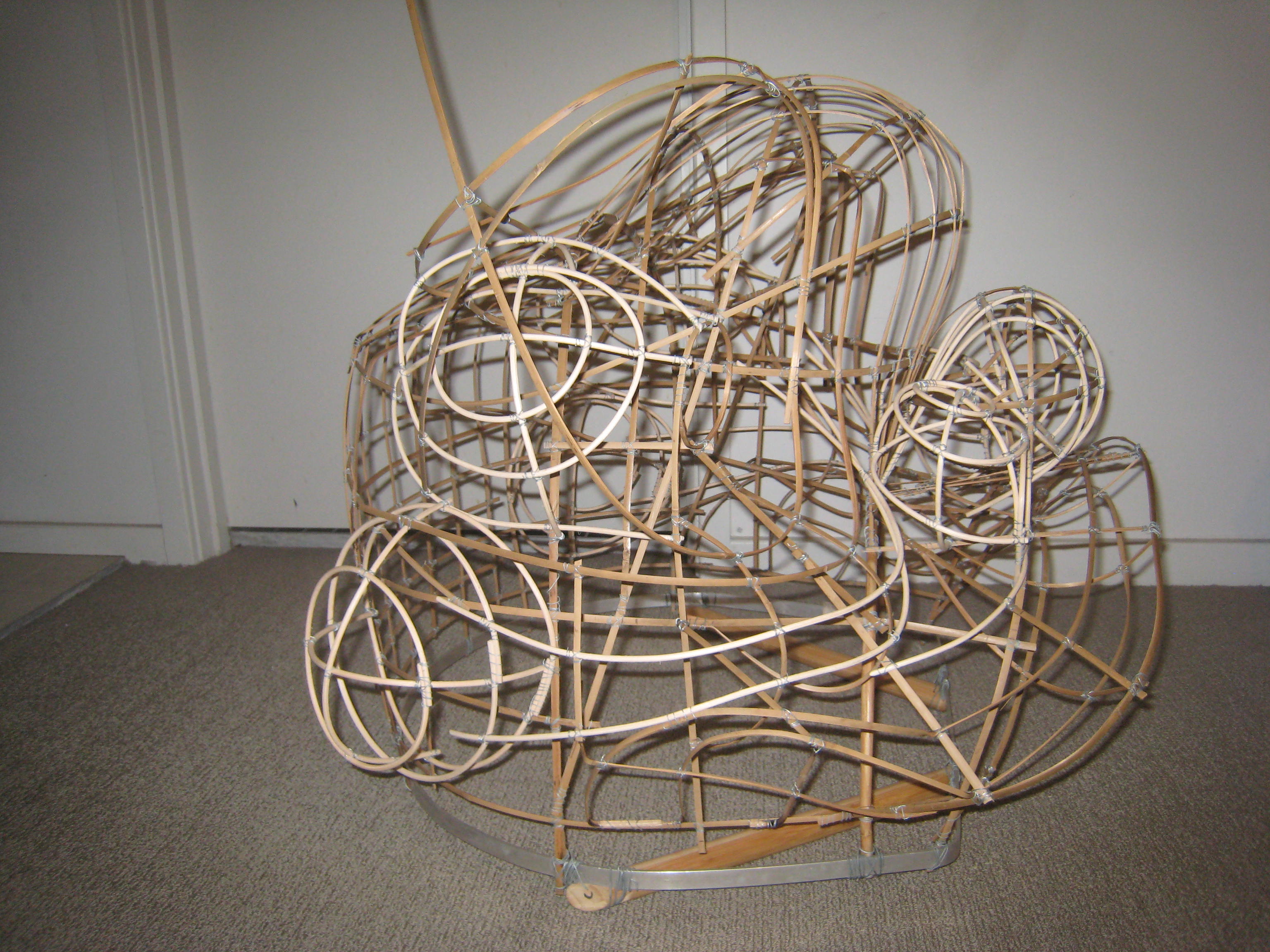
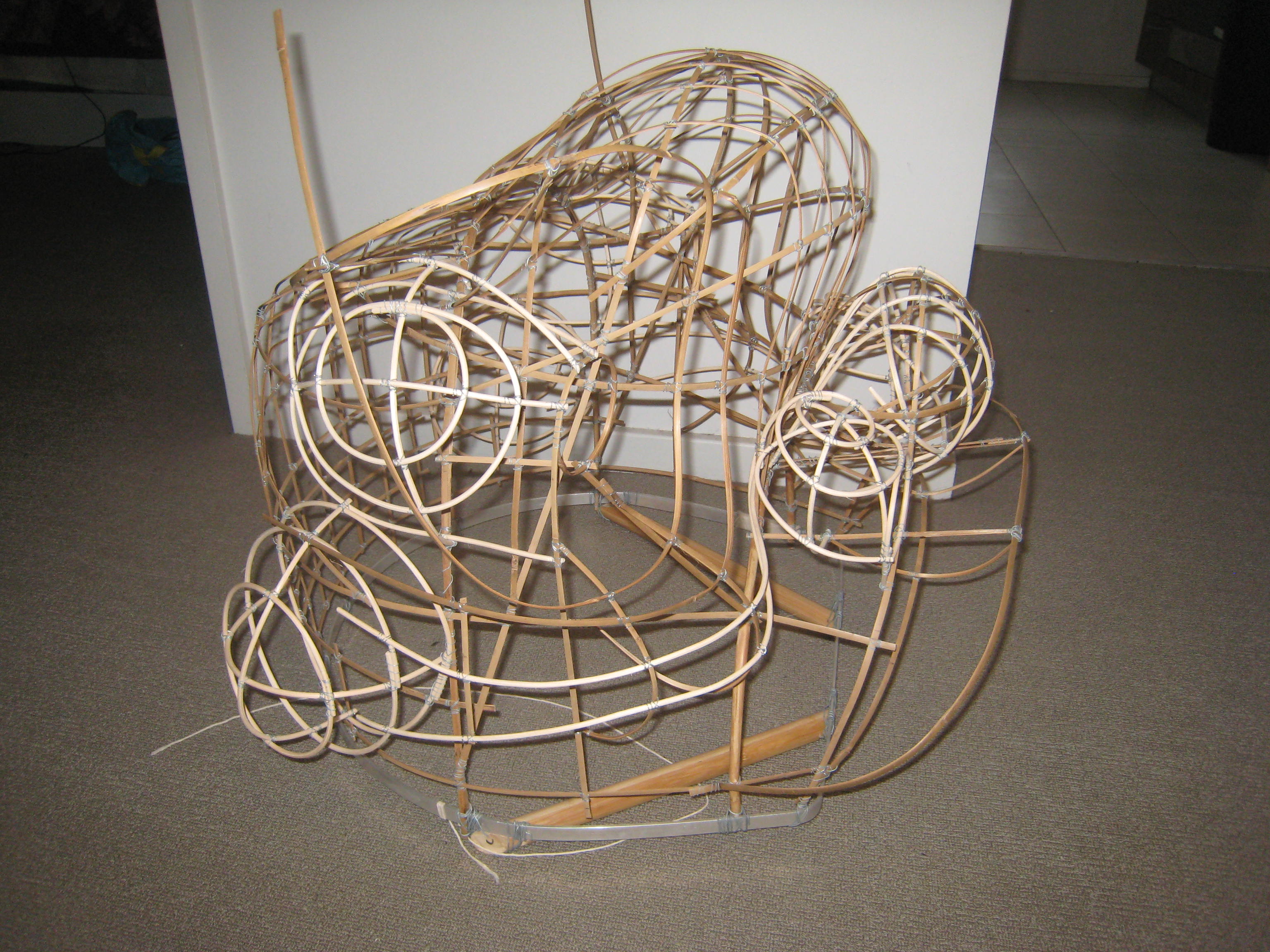
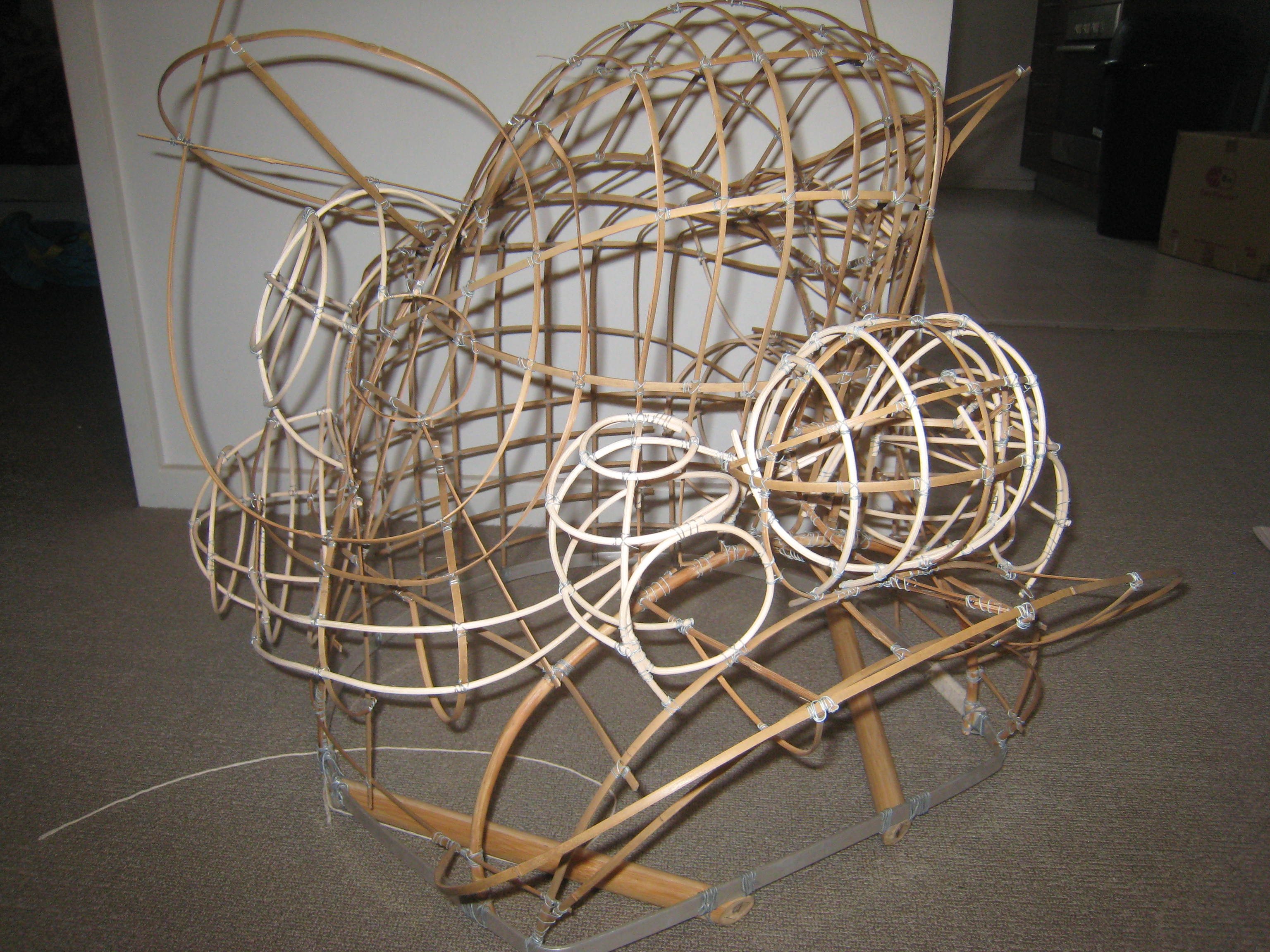
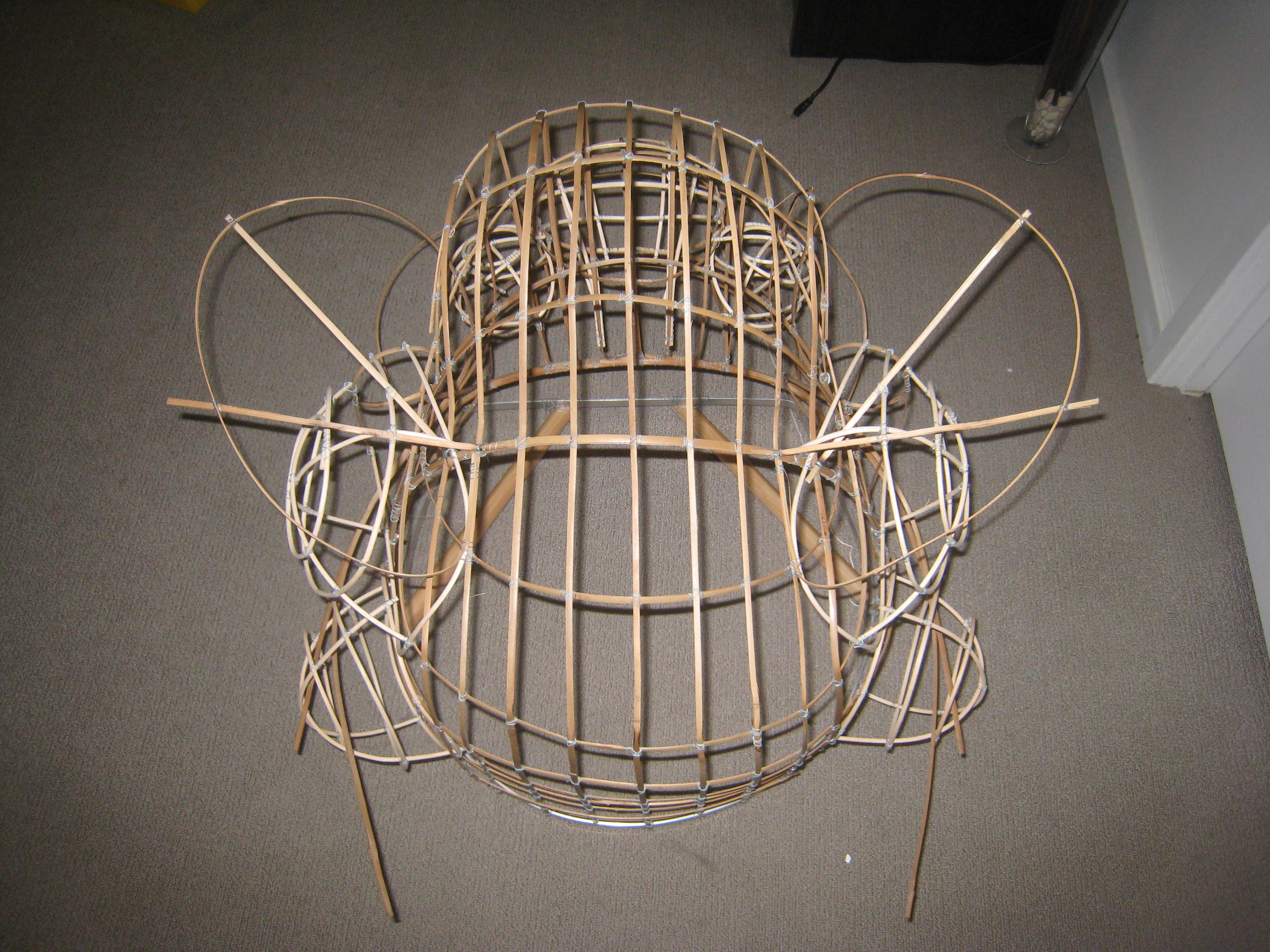
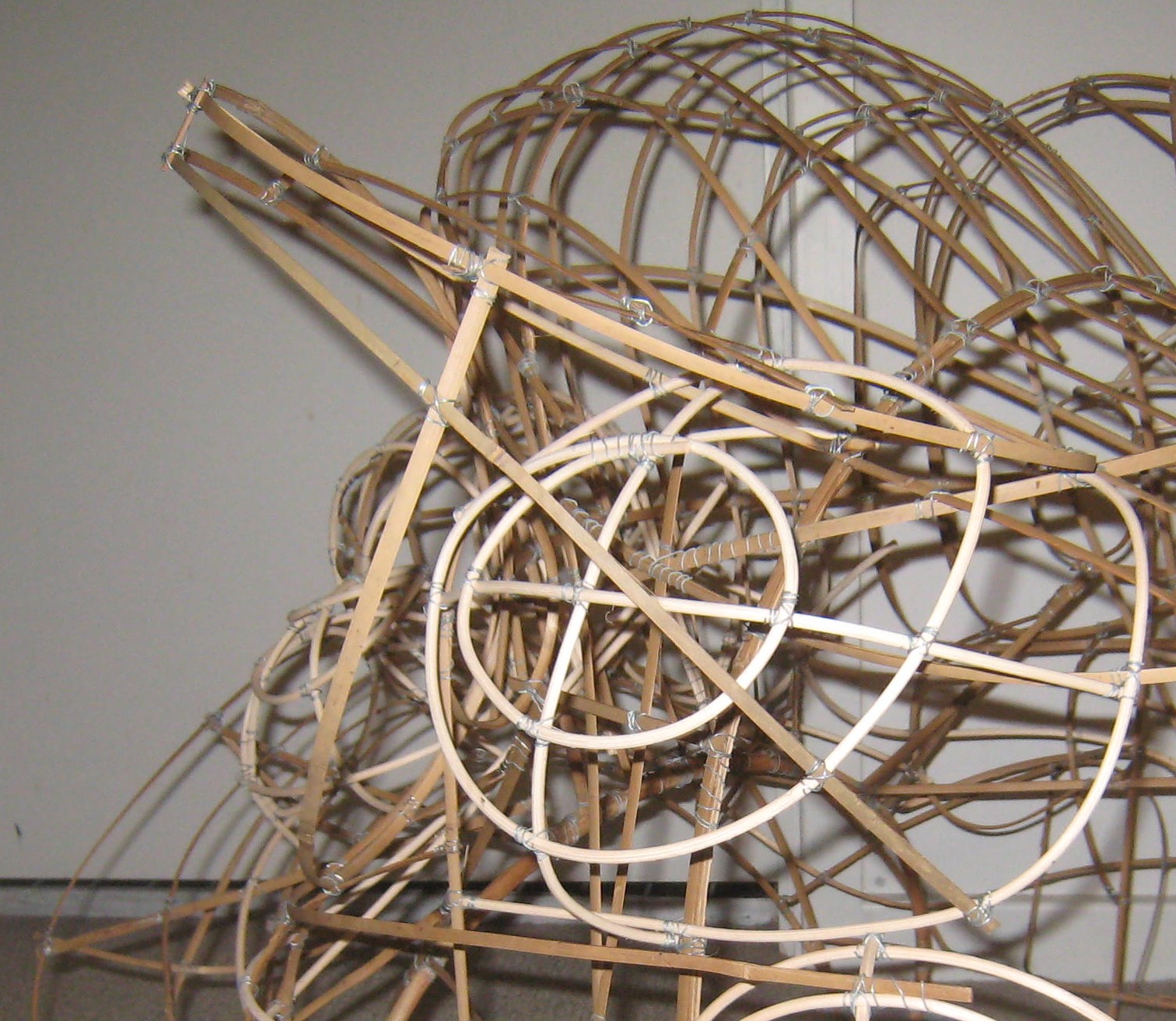
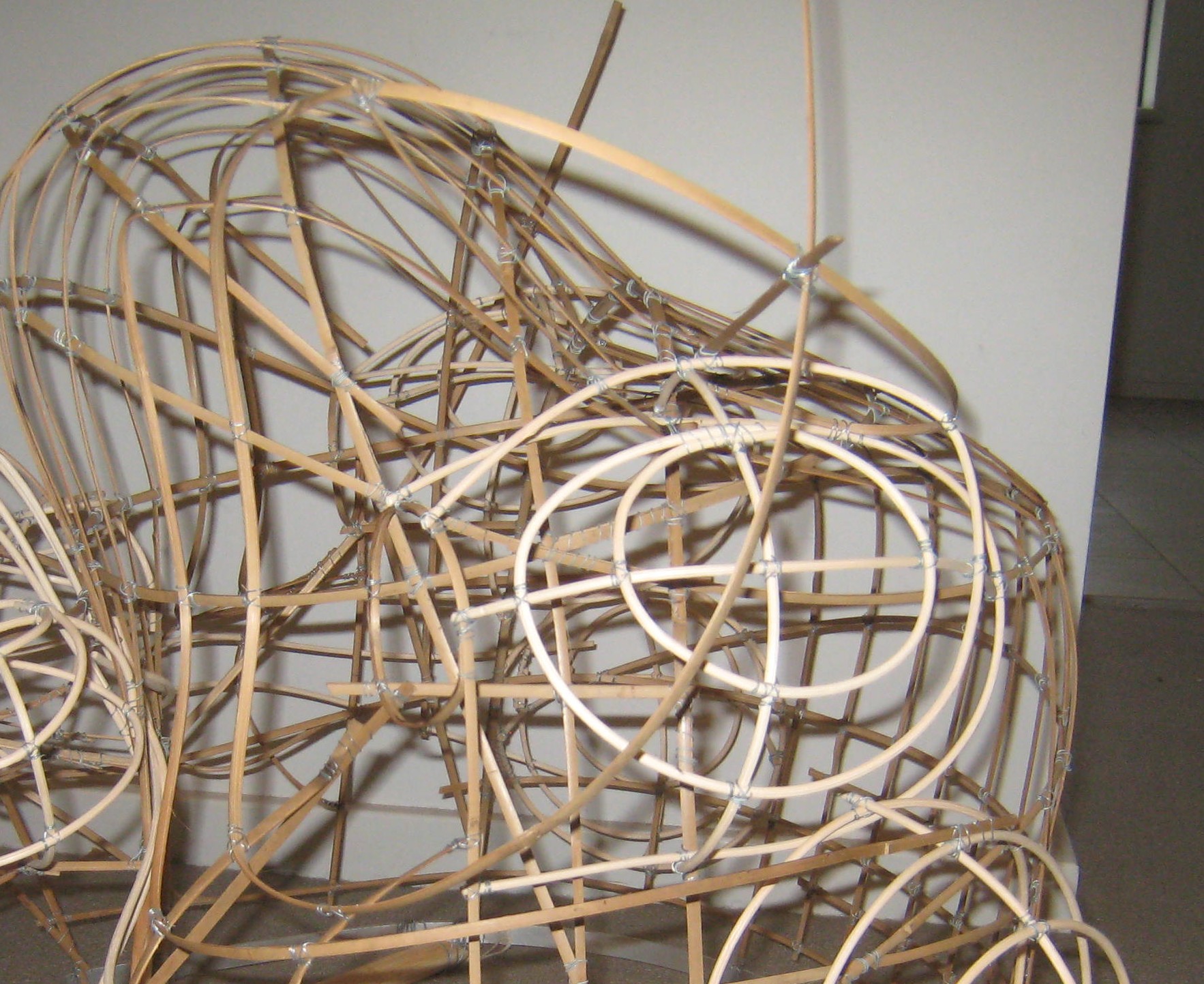
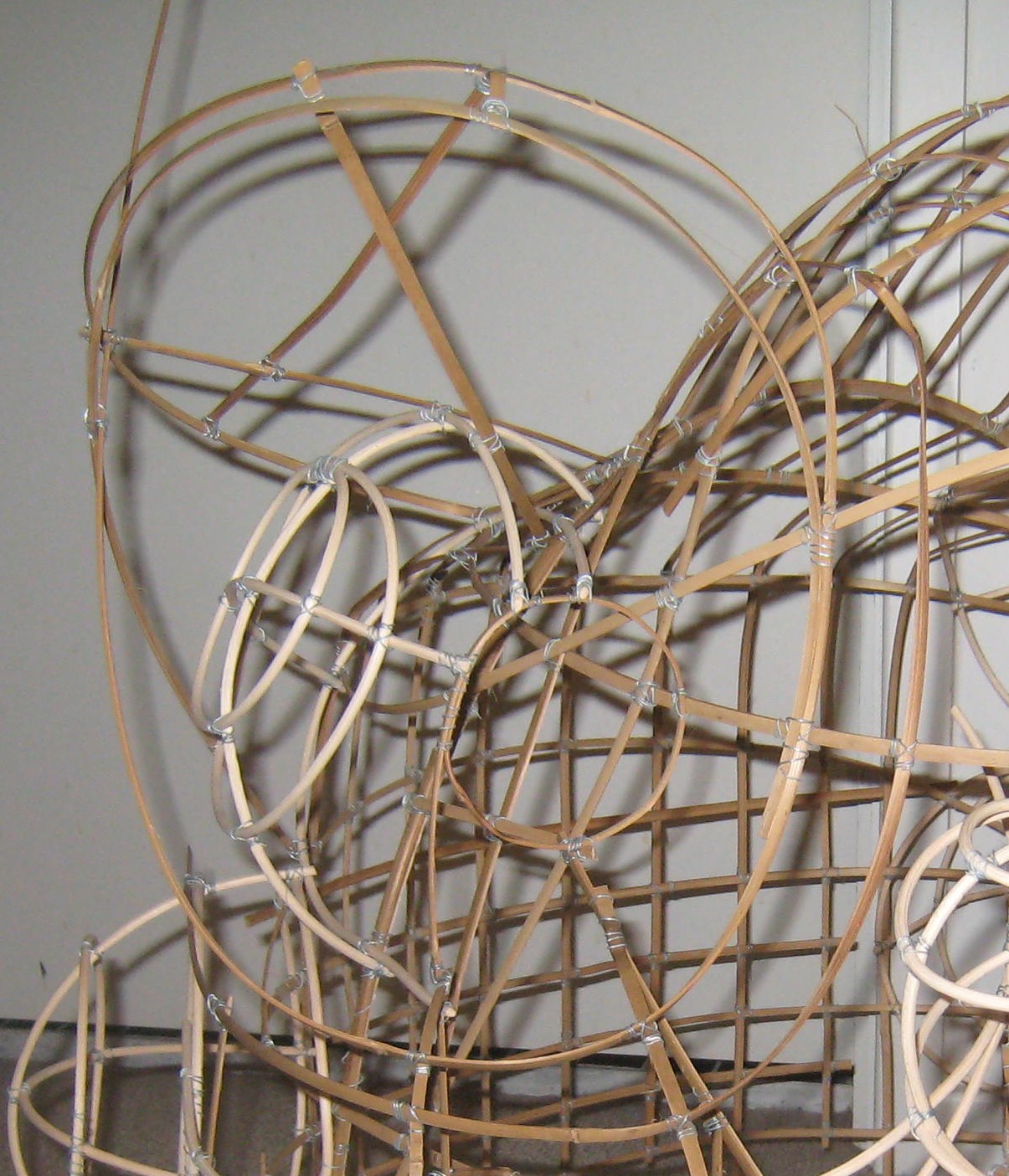
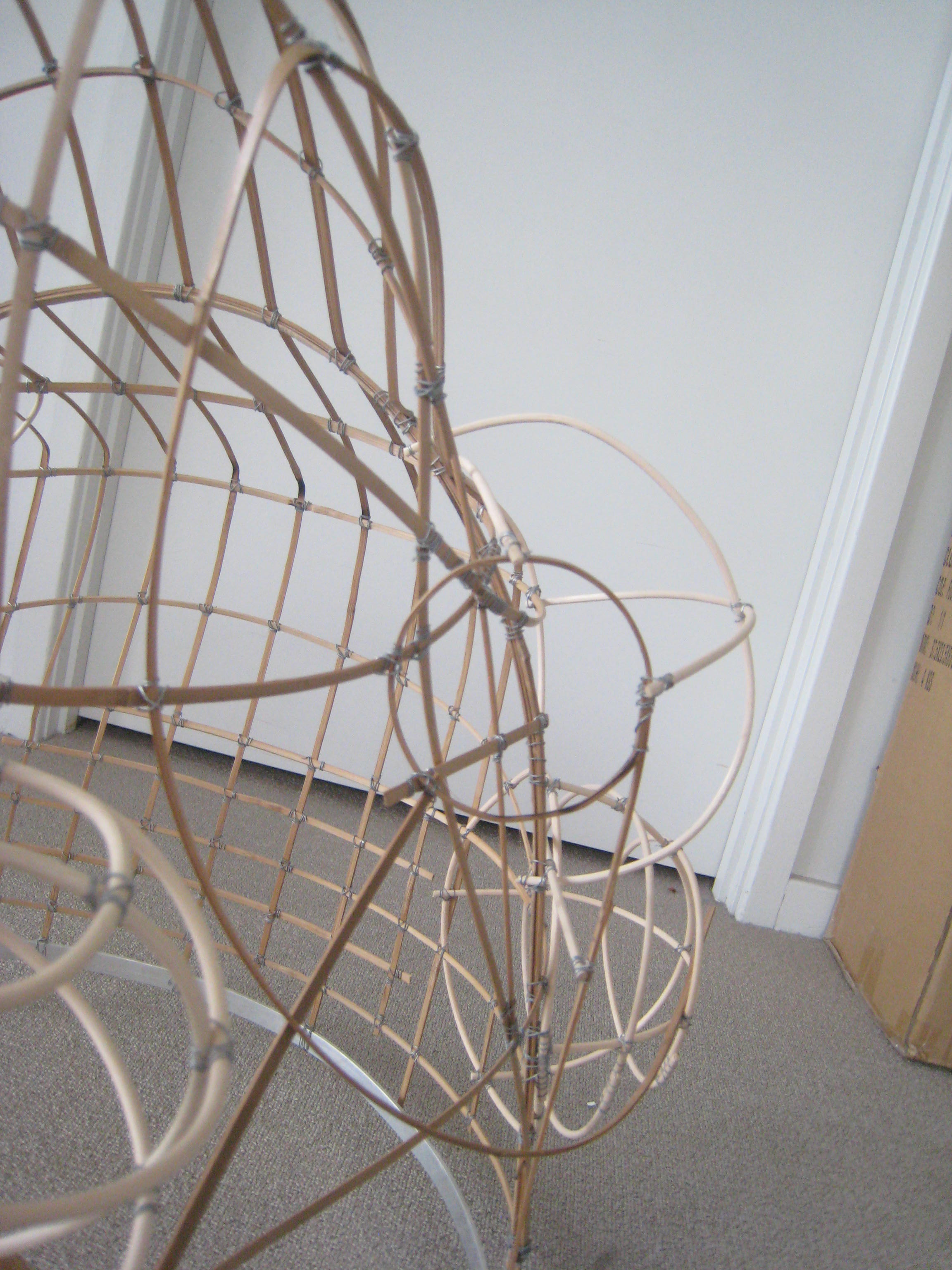
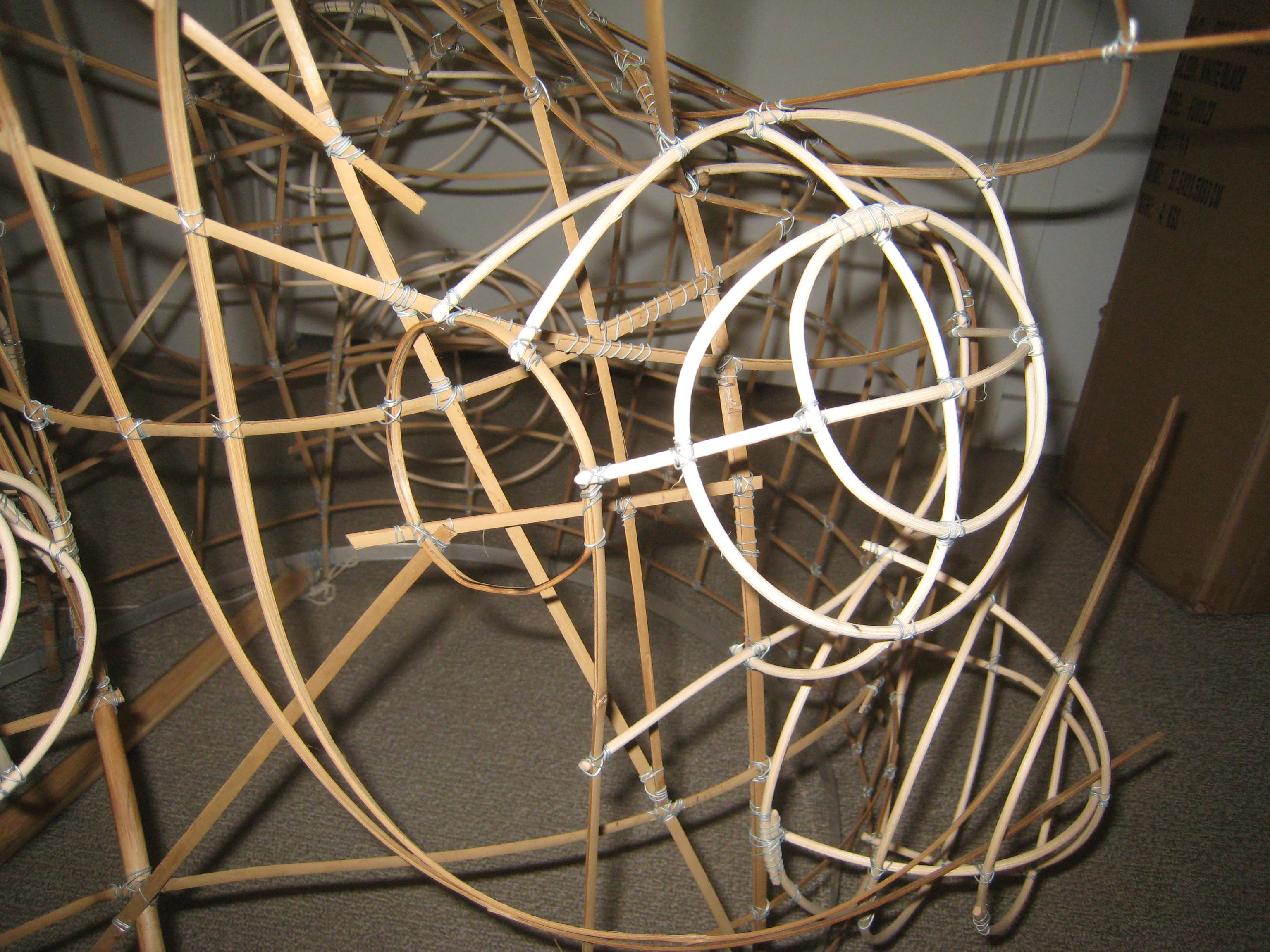
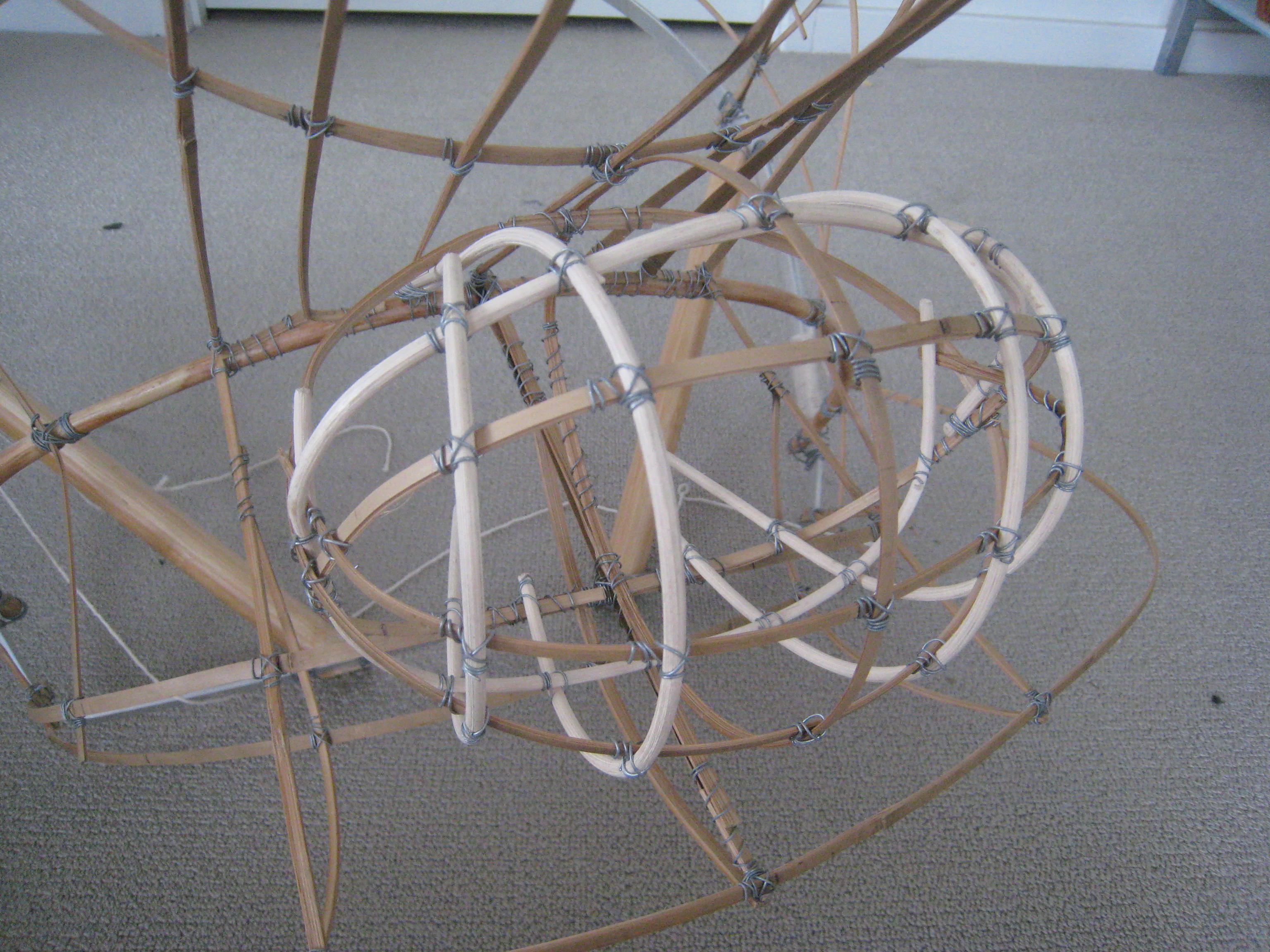
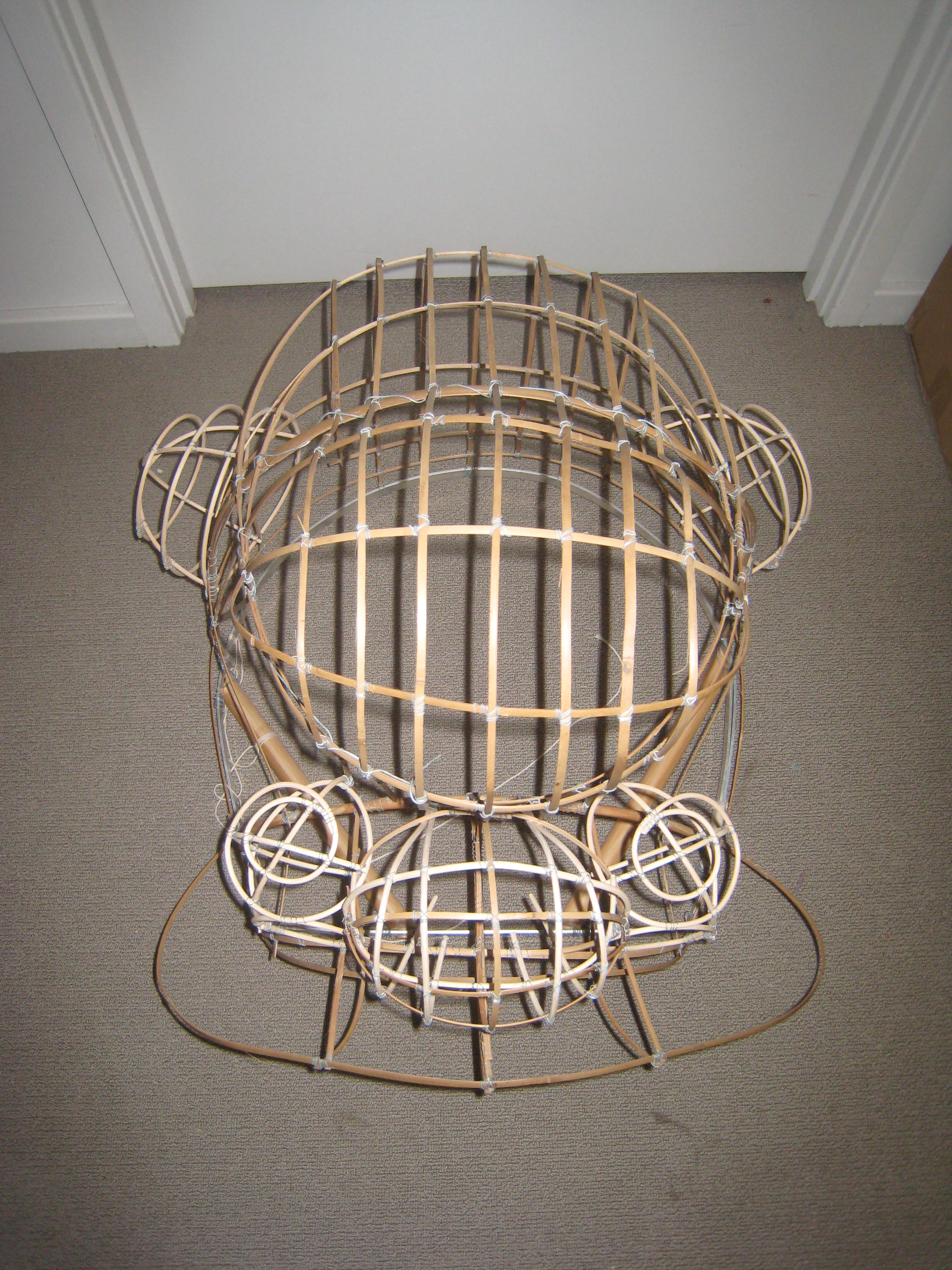
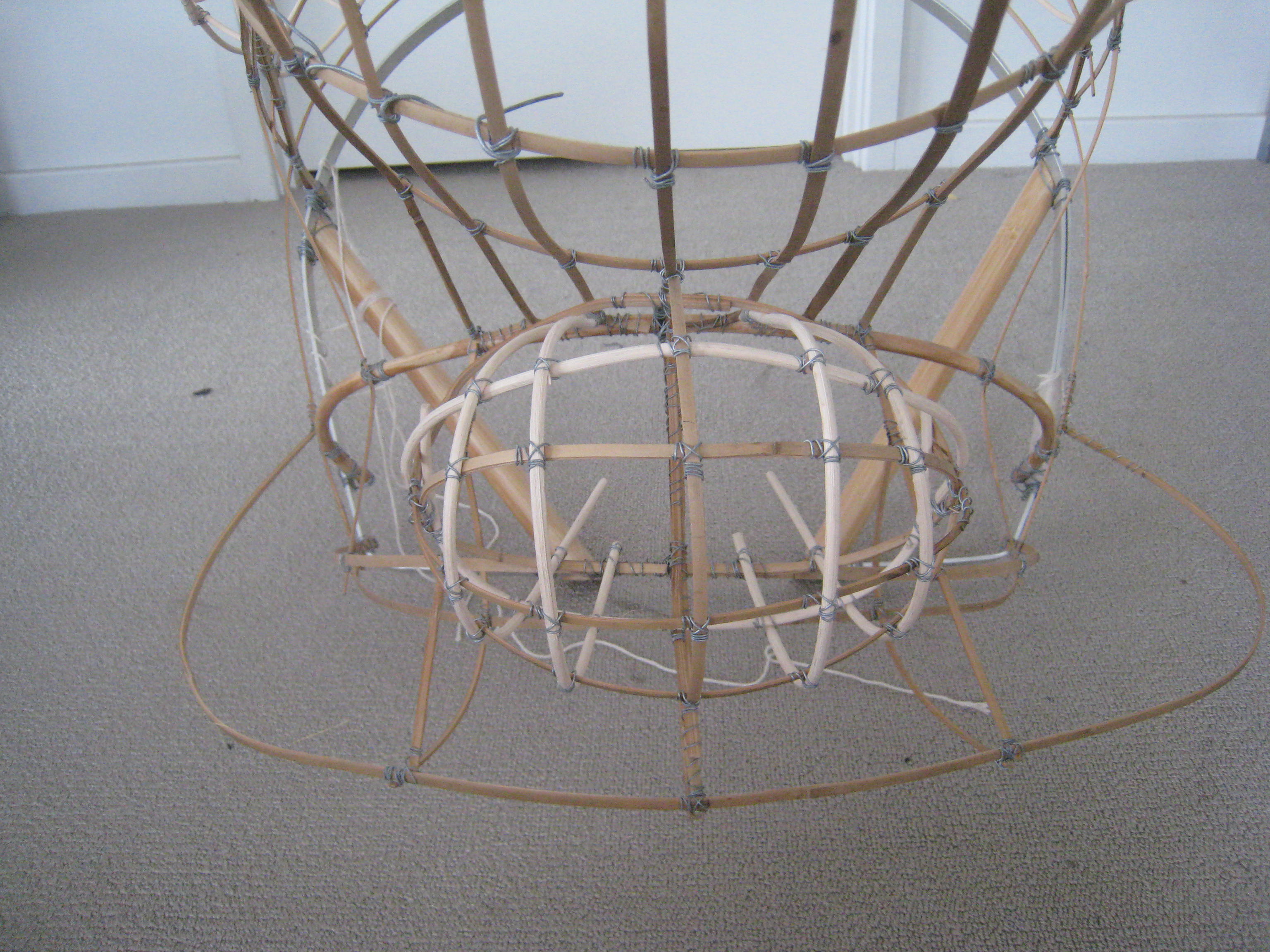
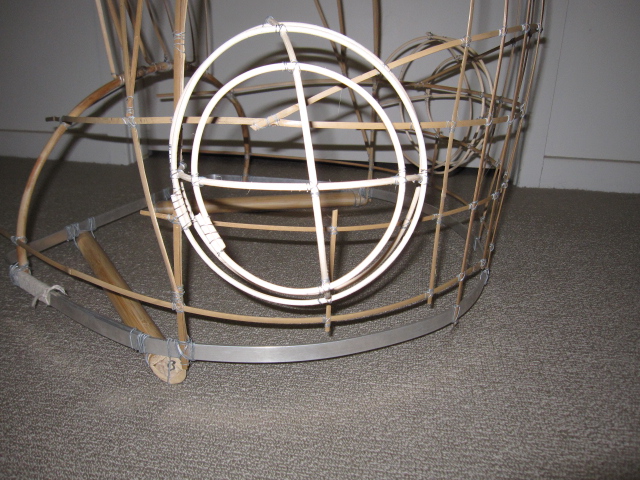
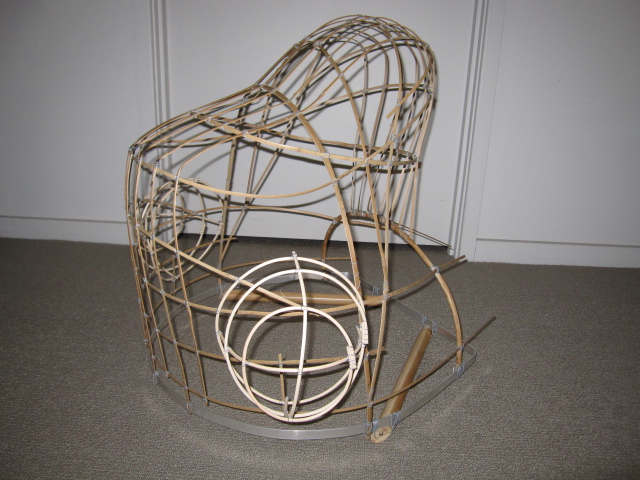
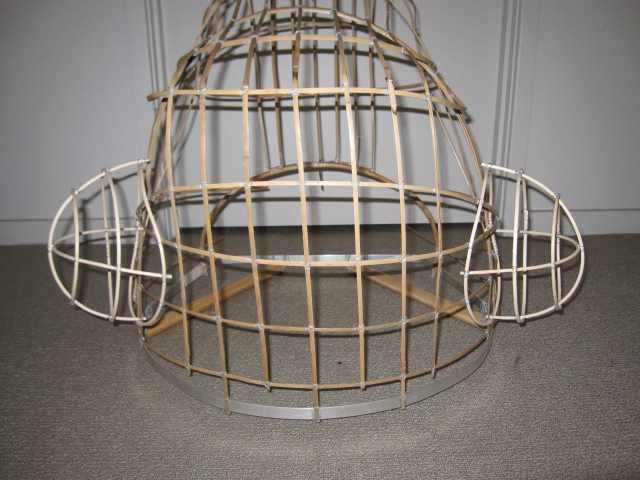
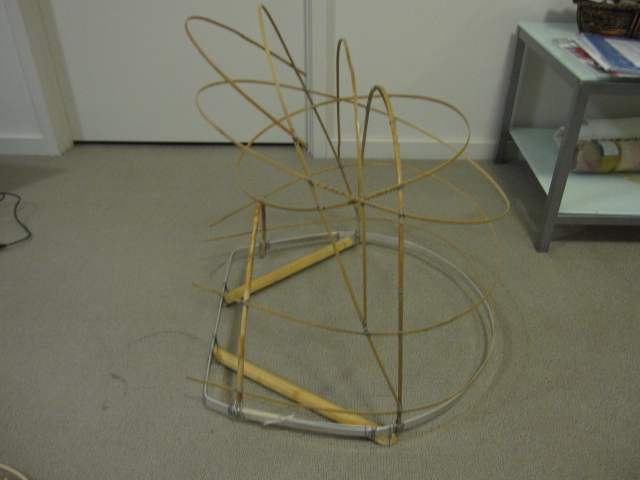
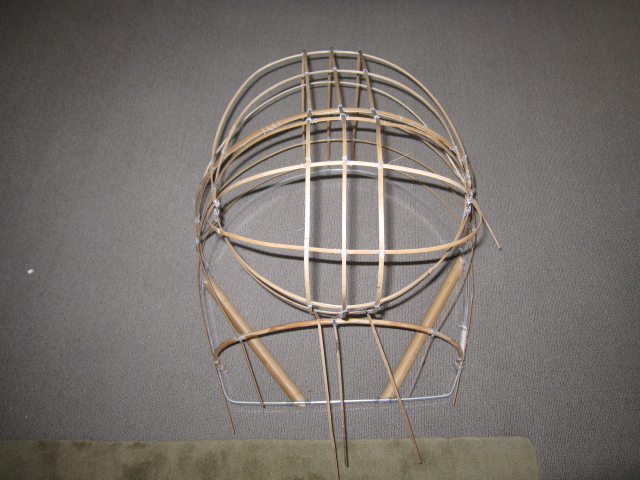
After the main frame was complete, it was time to add the wire.
This included functional wires needed for the eyes and the ears to be in place and the wires needed to make the eyelids.
Finally I added the fancy wirework- fangs for the mouth, fins and a spiral piece on the eyebrows.
Author Archives: nnnguy
Step 10: The horn
Again, I deviated from my model with the horn. It was just too difficult to get exact measurements. I decided to experiment using rattan and sticky tape to make quick and easy models of various sizes and shapes. In the end, I used a combination of rattan and bamboo to make the horn.
The size of the horn is a bit larger than normal but I think it will work well.
Step 9: Finishing the top lip
I started on the top lip earlier but put off finishing it at that stage because of the difficulty. Aesthetically and mentally for me, I really wanted to see my frame actually look like a lion to give me the motivation to keep on going.
But this stage, I had already made the eyes, cheek and nose and all I wanted to do now was to finish that mouth!
And there it is! My base frame almost complete.
Hard work finally paid off to have something faintly resembling a lion.
Step 8: The Cheeks
Another one of the more harder parts to do and much more fiddly especially involving the support structures for the cheek.
This part was much harder to replicate from the original as by this stage, a few of my dimensions were already different from the original and there was no way for me to correctly get the angles for the cheek supports.
In the end I just went with the curve of the bamboo and my eye as a guide to make the cheeks look round and full.
Step 7: The Eyebrows
It finally looks and resembles more like a lion now!
I deviated away from my model completely here and adjusted the height and size of the brow according to how I wanted the lion to look. I was hoping to get more of a “baak wan” lion look with its eyes being more wider set so I made the brows quite wide.
I also adjusted the front of the eye so that the side of the eyes are more forward facing than having a streamlined look (as you might find with jow gar lions)
Note: I added the fins and spirals and other wire work at the end
Step 6: The Eye Sockets
This part was quite tricky because despite getting all the dimensions right, there was still a bit of guess work involved with the positioning of the actual eye socket. There was no surrounding structures to use as a reference point. so with a bit of hand eye coordination, I think it worked out alright in the end.
Another facial feature which made this lion one step closer to a face!
Step 5: the Nose
This was one of the more fun parts to complete. I used a combination of bamboo strips and rattan for this area, and it turned out quite well. Because the joints were much closer together, the nose felt quite solid and strong and it gave the lion an identifiable feature. One step closer to becoming a lion!!!
Note: It was a bit tricky trying to get the dimensions of the certain parts as I was juggling to fit in my measure tape and measuring sticks into the model’s nose. I’m starting to become less anal about having exact measurements. Little imperfections don’t matter too much and give the lion a real feeling.
Step 4: The first part of the top lip
My first hurdle, this is where I started having difficulty getting it right.
Now there are smaller pieces to contend with and curves in shorter pieces of bamboo strips (more pressure on the strip).
In the end, I decided to only attach and make the main sections of the top lip that would be involved in structural purposes.
I’ll revisit the top lip later on
I wasn’t good with my photo documentation of my progress. Here you can see the bit of the top lip which I started plus the main bit of the nose which I enjoyed doing much more.
Step 3: The gills
I chose this section before the top lip because in some ways, I was quite scared of progressing to the lip. The process of having difficult bends and multiple smaller pieces was daunting so I put it off for now.
For the gills, I was tossing up between whether I should have rounded gills or proper crescent gills with fins attached to them. I really like the style and beauty of lion heads with the double gills and sphere attachment but I was a bit too afraid of it being too difficult and fiddly with all the little parts so I opted for the round gills instead.
I diverged a bit away from my model with this part. I wanted my lion to have much large prominent gills so it would stand out more as a particular feature so I elongated some of the dimensions on my pieces.
This is also the part where I introduced rattan strips into my head. I didn’t think I would have enough bamboo strip to complete the rest of the bit so I thought this area wouldn’t detract too much from the heads stability if I used the rattan. It’s much softer and pliable compared to the bamboo and the support isn’t as good but these bits don’t get beat up too much when the heads shaken.
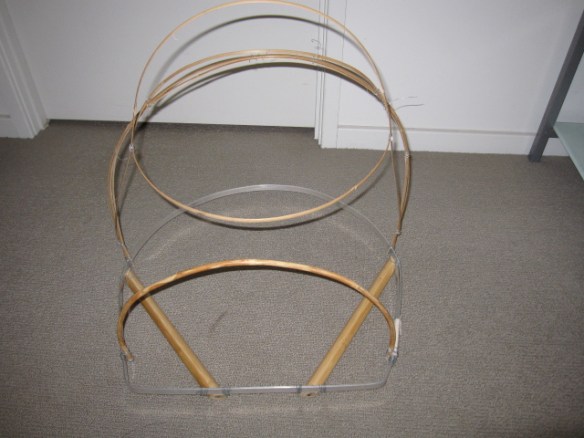
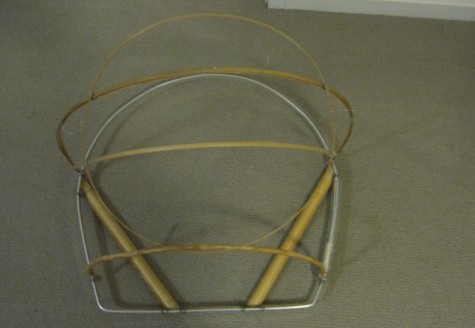
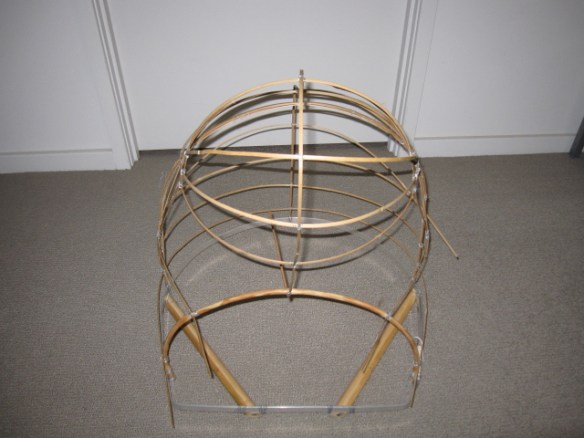
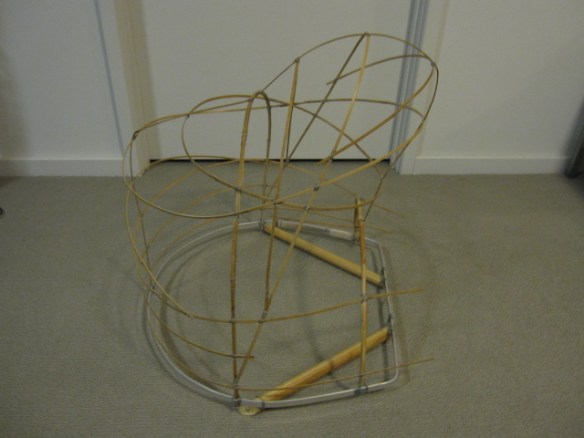
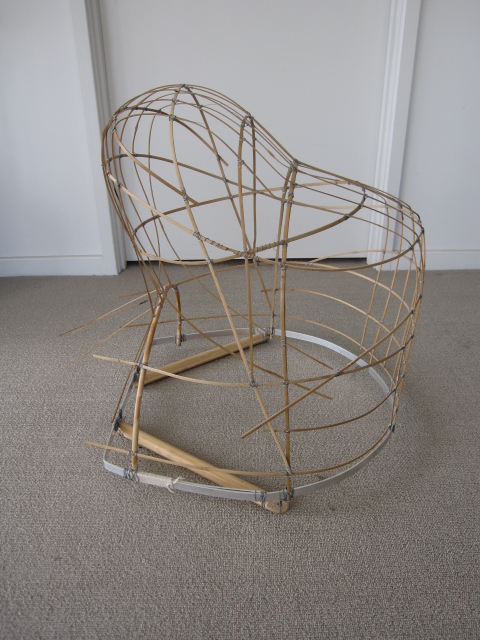
Step 2: The main body
My lion head was going to be a replica of the model lion head I had, as such,
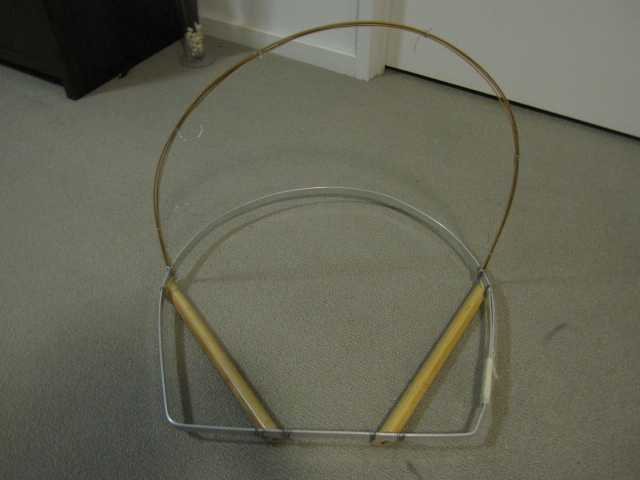
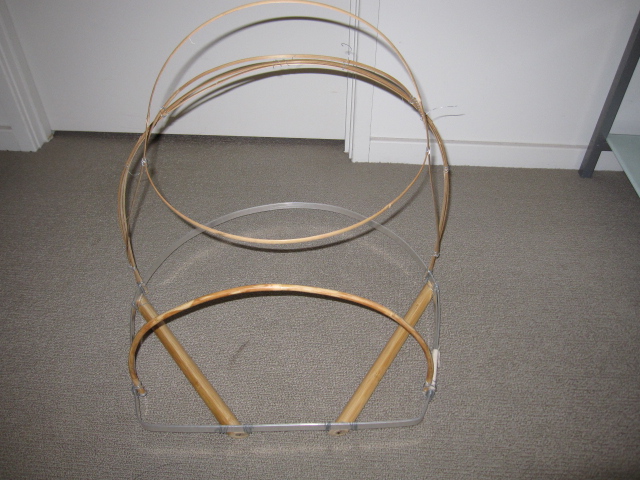
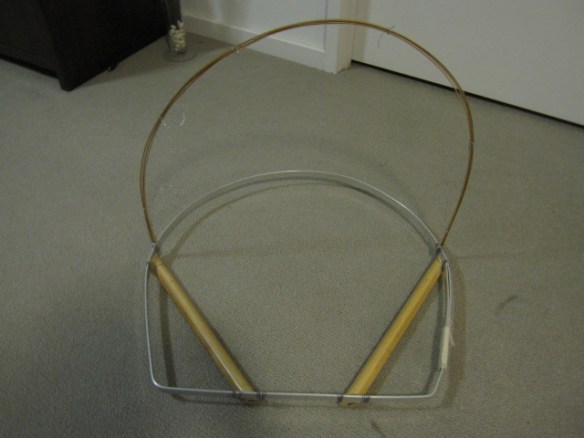
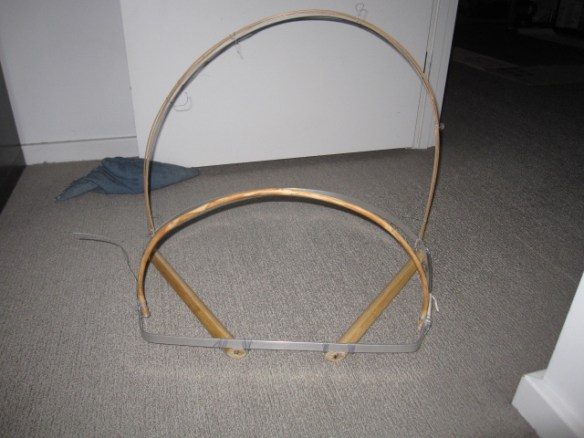
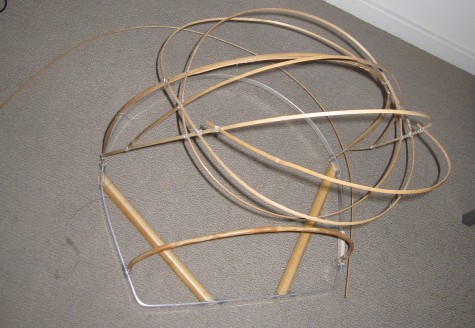
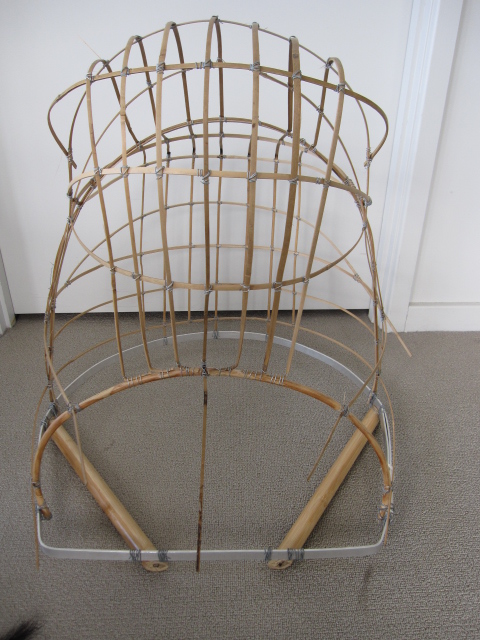
The main body consisted of three strips of bamboo bound together (I didn’t have a single thick bamboo piece) that took on the main structural support of the main lion body. For the long section, I used 3 bamboo strips fasted together to make one strong sturdy strip and tied it to the base.
For the second shorter one, I ended up using a rattan/ cane ring which I found at an arts and c rafts store (probably used as a base for other arts projects) separated the join and stretched it out to form a large curve. The length was perfectly matched to the original.
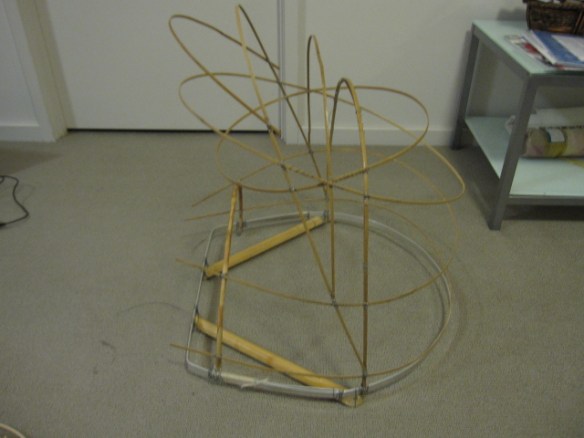
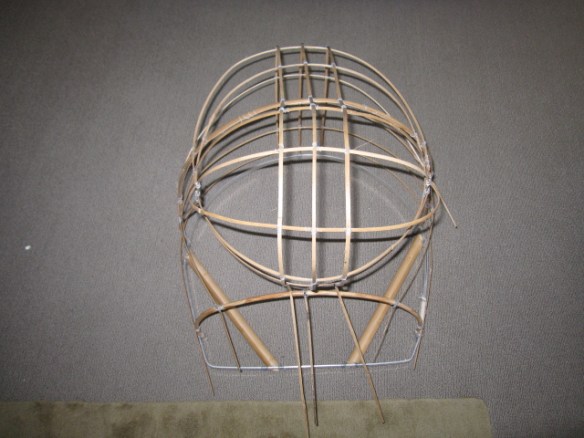
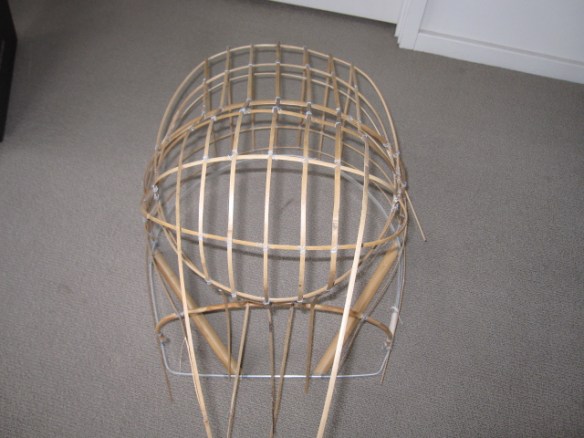
From this it was a bit tedious measuring each bamboo strip before tying it on to the main supporting strips to start forming the main body.
As you can see, my measuring wasn’t all that up to scratch and the head was a bit lop sided.
Hopefully it doesn’t affect things too much. I’m hoping with the finished product that a bit of the fur, pom poms and mirror will hide some of the imperfections.

Feelings so far
So far I’ve found making this lion head quite relaxing. It’s like a giant puzzle!
As a young kid, I’ve always enjoyed making lego bits, or gundam models and giant puzzles. This feels exactly like that. A lot of the time, I find myself sitting and staring at the model lion head and then at my skeletal lion head and think, wow! I have such a long way to go but as I start figuring out which part of the lion I should add on next and then length of the pieces and their positions starting coming together, then it becomes a great feeling as I can see progress.
Hint on binding
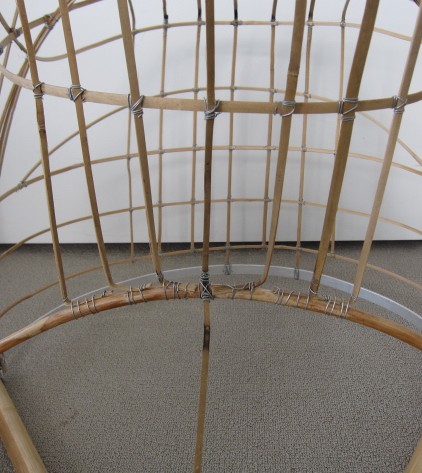
In my first project, I experimented with different ways of trying to tie the bamboo bits together. I’ve tried twine, paper ties, hot glue and finally thin metal wire. I’ve found thin metal wire to be the easiest to use by far, producing both strong joints, quick tying times and little mess.
I’m not too sure how the joints will do in the long run, especially being stressed through all the bends in the wire as well as the vigorous shaking that it will be put through but in the meantime, it’s the easiest medium to use.