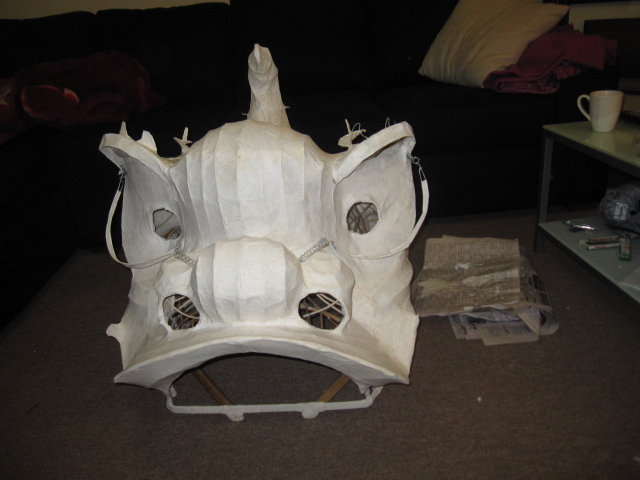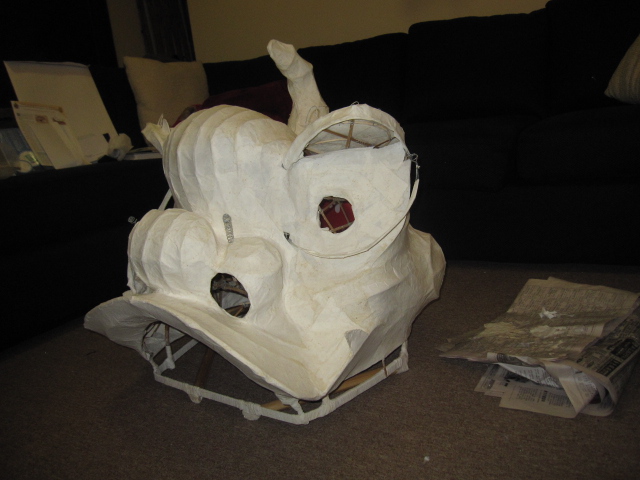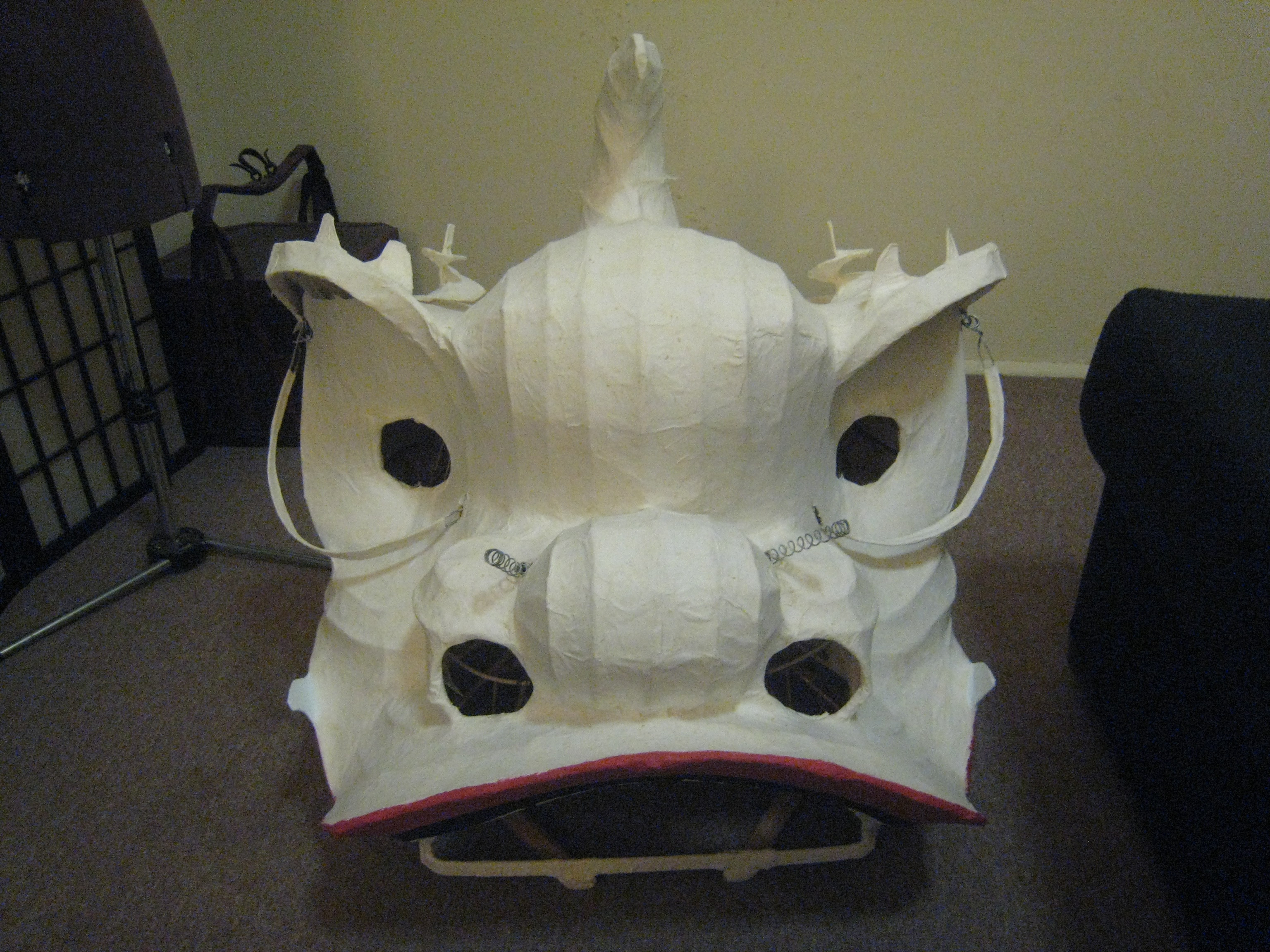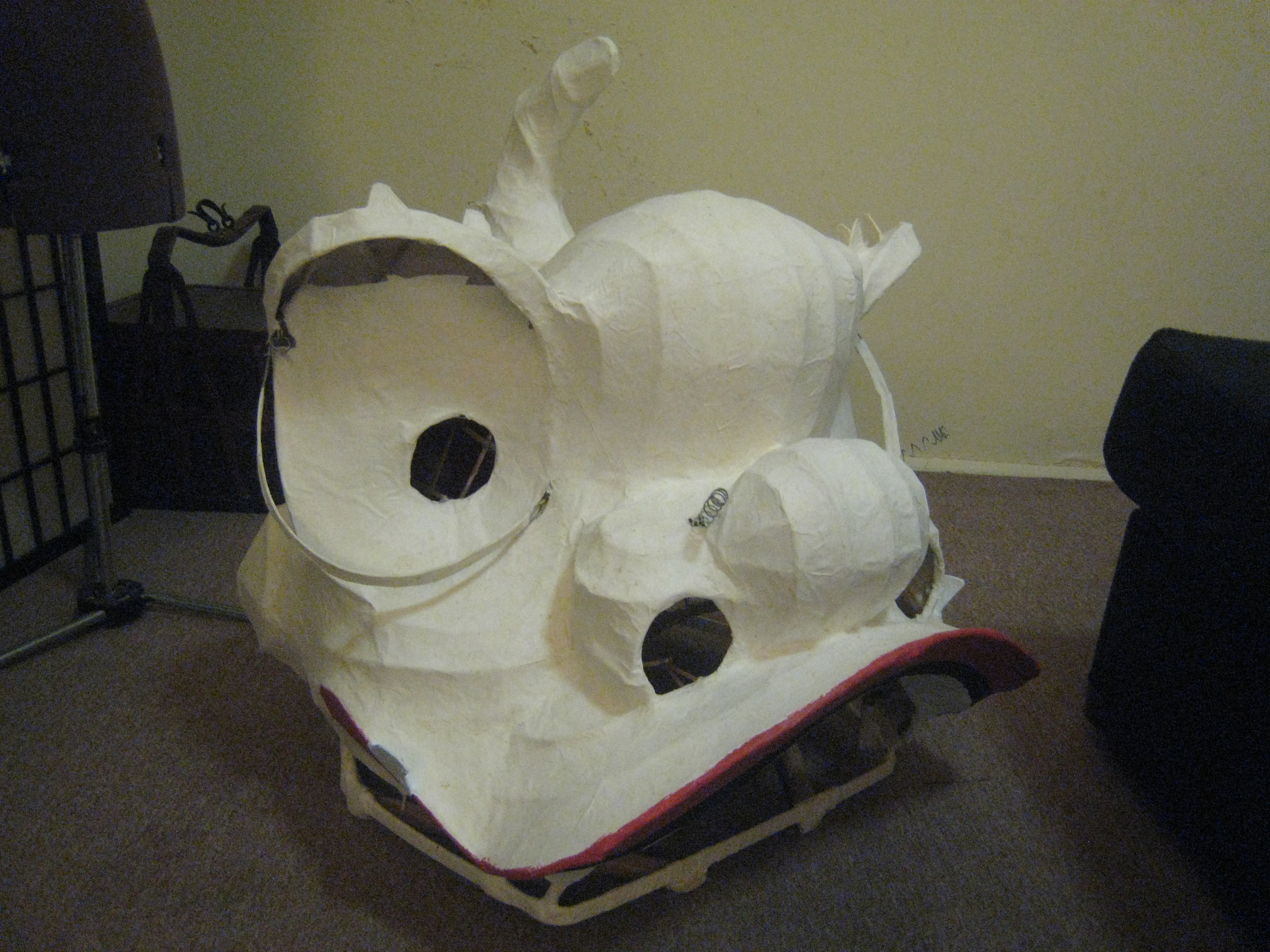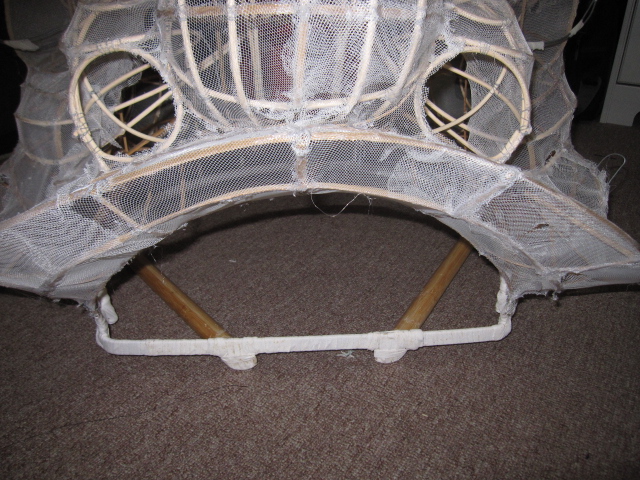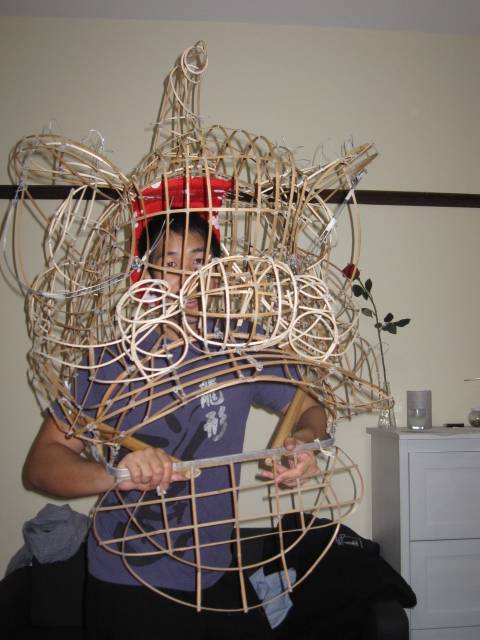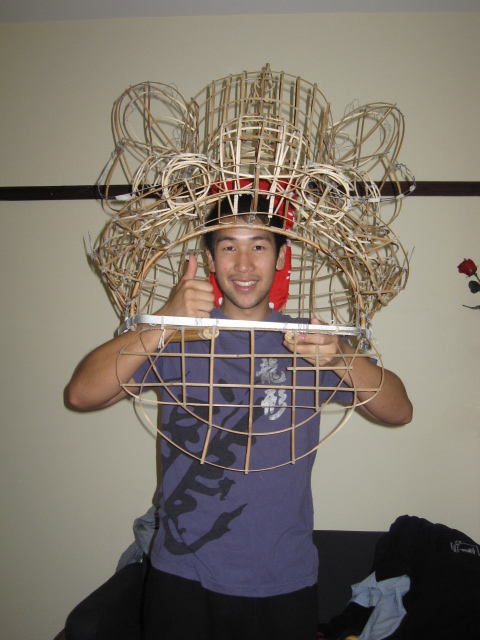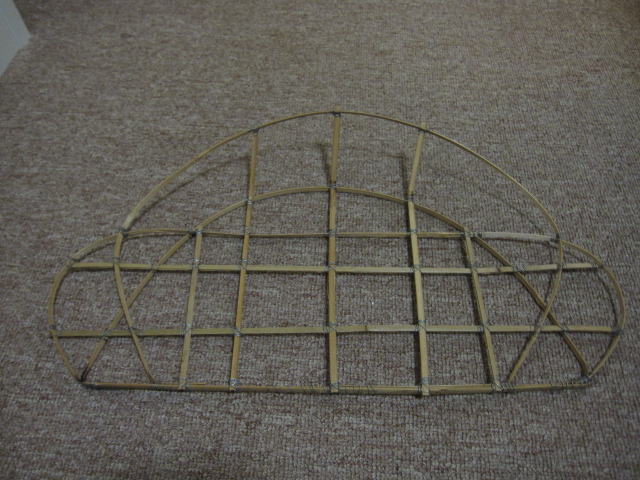
Step 16: Wrapping the base

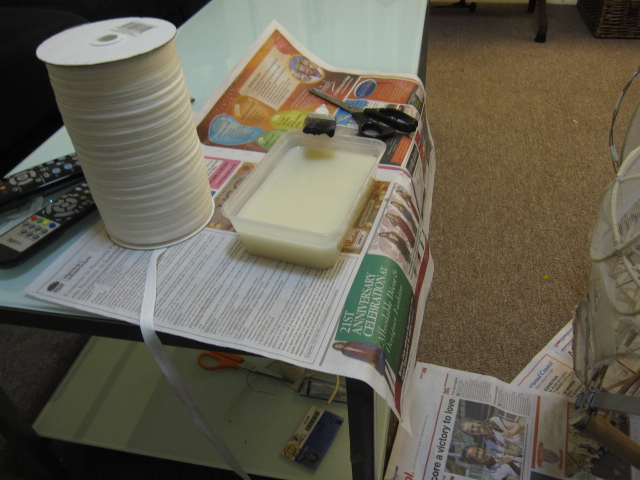
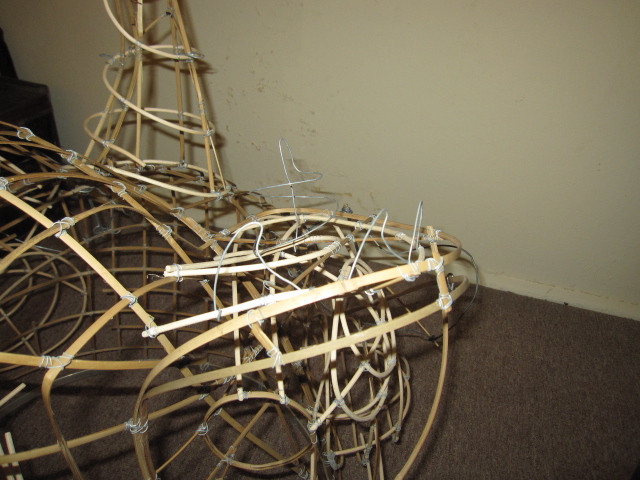
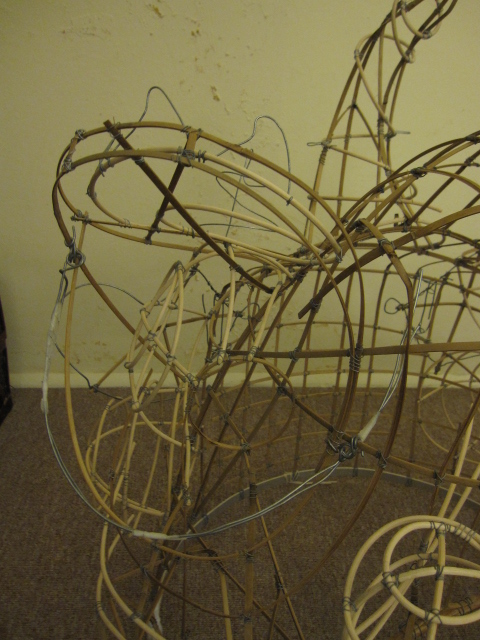
I went with the cotton tape to wrap the base rather than rattan strips purely from past experience. I had found rattan strips at Spotlight (local arts and craft store) but opted for the former.
The glue I used was from a recipe I found online which involved boiling flour and water together to get a thick paste. Worked well but it was time consuming making the glue and took a while for the glue to dry. However, it turned out pretty good with the cotton tape holding its shape and keeping things together.

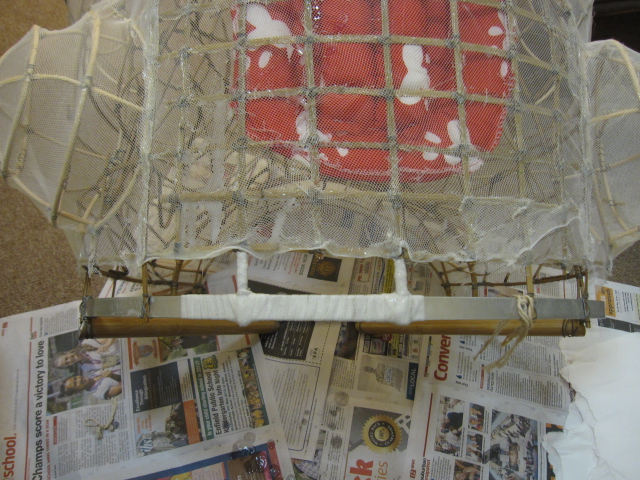
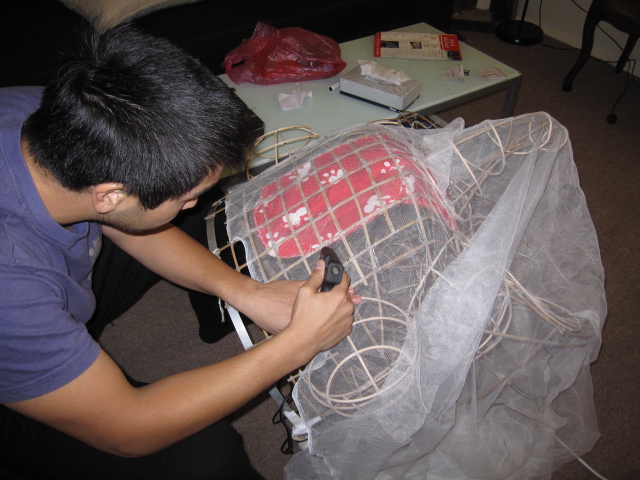
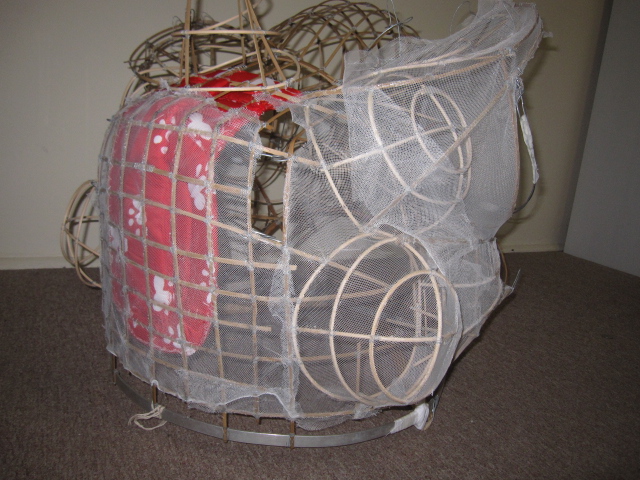
Step 15: netting over the lion

As with my previous lion that I restored, I found the best way apply the paper mache was to hot glue netting onto the bamboo frame first, This worked by giving the paper something to stick to as well as providing a body to the paper (similar to concreters using metal rods through during construction). In the past, I have used mosquito netting. This time round, I had some cheap curtain netting that I found at IKEA which I used.

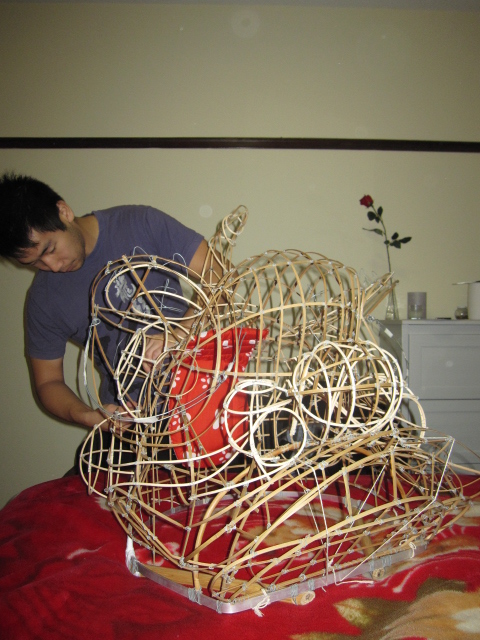
FRAME DONE!! 27th May 2012

It took me over from the 12th February 2011- 27th May 2012 to get to this stage.
So a bit over a year. I must admit, the lion did hang on my wall idle for a fair bit of time as a I stared it down not really wanting to gather my equipment and sit and ponder which piece to measure next and which piece to attach on.
I’m glad I’ve gotten to this point.


Step 14: The head cushion

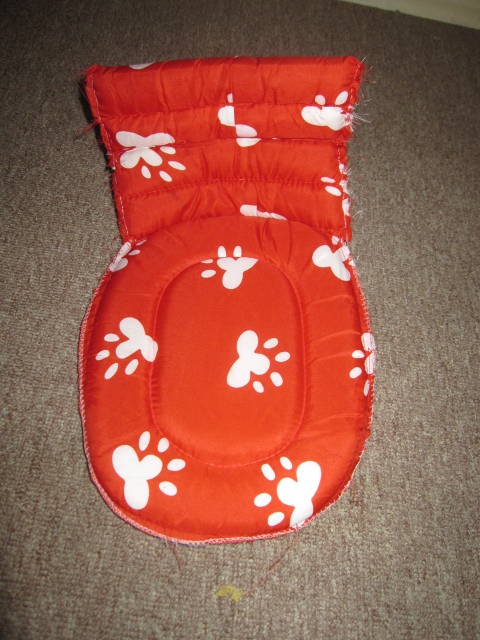
I got creative with this part. Initially, I was going to make the cushion from scratch, buying foam/sponge and sewing together a fabric casing for it before sewing it onto the frame.
After a very brief search (I mean very brief, I didn’t travel far nor did I check out arts and crafts stores), I came across two potential shortcuts. First item I found was a ready made thin seat cushion (the ones that you place on the bum area and you sit on), and the second item was a puppies bed. Both were quite cheap and both were ready made cushions with fabric covering it!! This was going to save me time and money. In the end I opted for the puppies cushion and made a few adjustments to it before sewing it securely to the frame. It works a treat at 4dollars!

Step 13: The Mouth

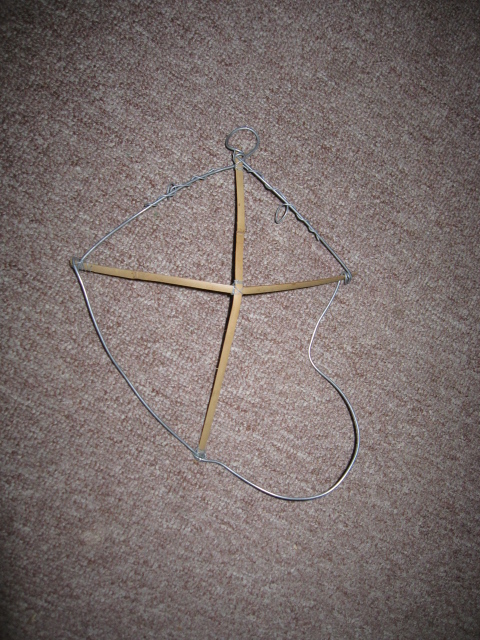
Another deviation from the plan. I have come across a few lion’s ears which have been damaged through wear and tear over the years especially around the attachments to the head itself and wear the strings are attached. Some of the damage I have come across also involved too much strain on bamboo framing which have ended up snapping. I wanted mine to be a bit more stronger and have seen a couple of ears around made with metal wire used to create the ear shape and two bamboo pieces crossed in the centre to create a 3D body.

In the end, I put another few strips of bamboo around the areas where the hands apply pressure to the mouth for extra strength and support. (no pictures)

Step 12: The Ears

Another deviation from the plan. I have come across a few lion’s ears which have been damaged through wear and tear over the years especially around the attachments to the head itself and wear the strings are attached. Some of the damage I have come across also involved too much strain on bamboo framing which have ended up snapping. I wanted mine to be a bit more stronger and have seen a couple of ears around made with metal wire used to create the ear shape and two bamboo pieces crossed in the centre to create a 3D body.

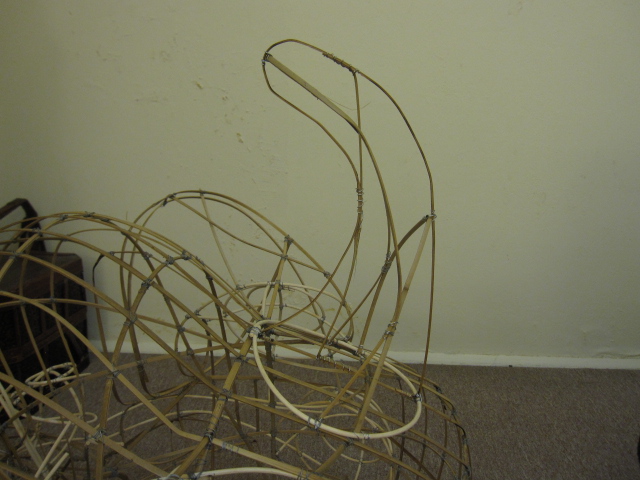
Step 10: The horn

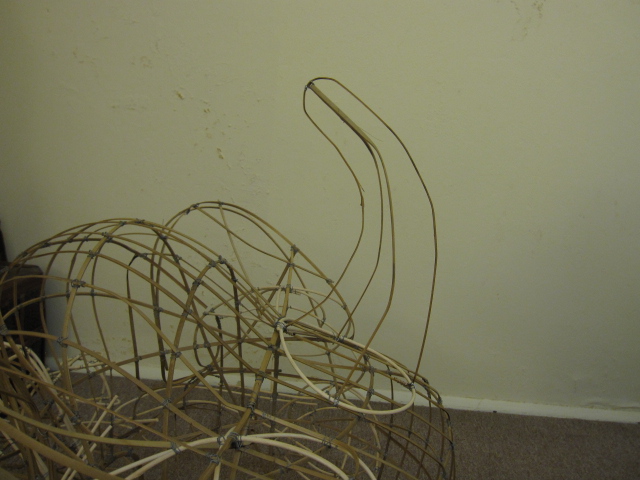
Again, I deviated from my model with the horn. It was just too difficult to get exact measurements. I decided  to experiment using rattan and sticky tape to make quick and easy models of various sizes and shapes. In the end, I used a combination of rattan and bamboo to make the horn.

The size of the horn is a bit larger than normal but I think it will work well.

My model horn

The real thing

Step 9: Finishing the top lip

I started on the top lip earlier but put off finishing it at that stage because of the difficulty. Aesthetically and mentally for me, I really wanted to see my frame actually look like a lion to give me the motivation to keep on going.
But this stage, I had already made the eyes, cheek and nose and all I wanted to do now was to finish that mouth!

And there it is! My base frame almost complete.
Hard work finally paid off to have something faintly resembling a lion.

Step 8: The Cheeks

Another one of the more harder parts to do and much more fiddly especially involving the support structures for the cheek.
This part was much harder to replicate from the original as by this stage, a few of my dimensions were already different from the original and there was no way for me to correctly get the angles for the cheek supports.
In the end I just went with the curve of the bamboo and my eye as a guide to make the cheeks look round and full.